
EMS World Expo 2026 · Booth 001

What your patient can't tell you, their scannable health profile can.

 Medications, allergies, emergency contacts, and more, with a simple scan.

Here’s what we showed, plus a recap from our medical advisor.

Hear from our medical advisor

A conversation with Hanna Eadeh, MD

Dr. Eadeh, a board-certified emergency physician and our medical advisor, shares what the team heard from medics and ePCR vendors at EMS World Expo, and walks through the workflow we're building next.

What this video covers

Dr. Eadeh explains how members connect the patient portals from their health systems and doctors’ offices to one Health Profile they own, then choose what to share through a single QR code. She then walks through where HealthScores.ai is headed with ePCR partners: a medic scanning that QR code from inside their own ePCR, the shared information filling fields like past medical history, and the same record reaching the receiving hospital. Those integrations are in development today, and we’re actively looking for EMS agencies and EHR, EMR, ePCR, and medical device companies to pilot with us and help shape what HealthScores.ai does next.

What we showed

One scan on scene. Meds, allergies, and history in your hand.

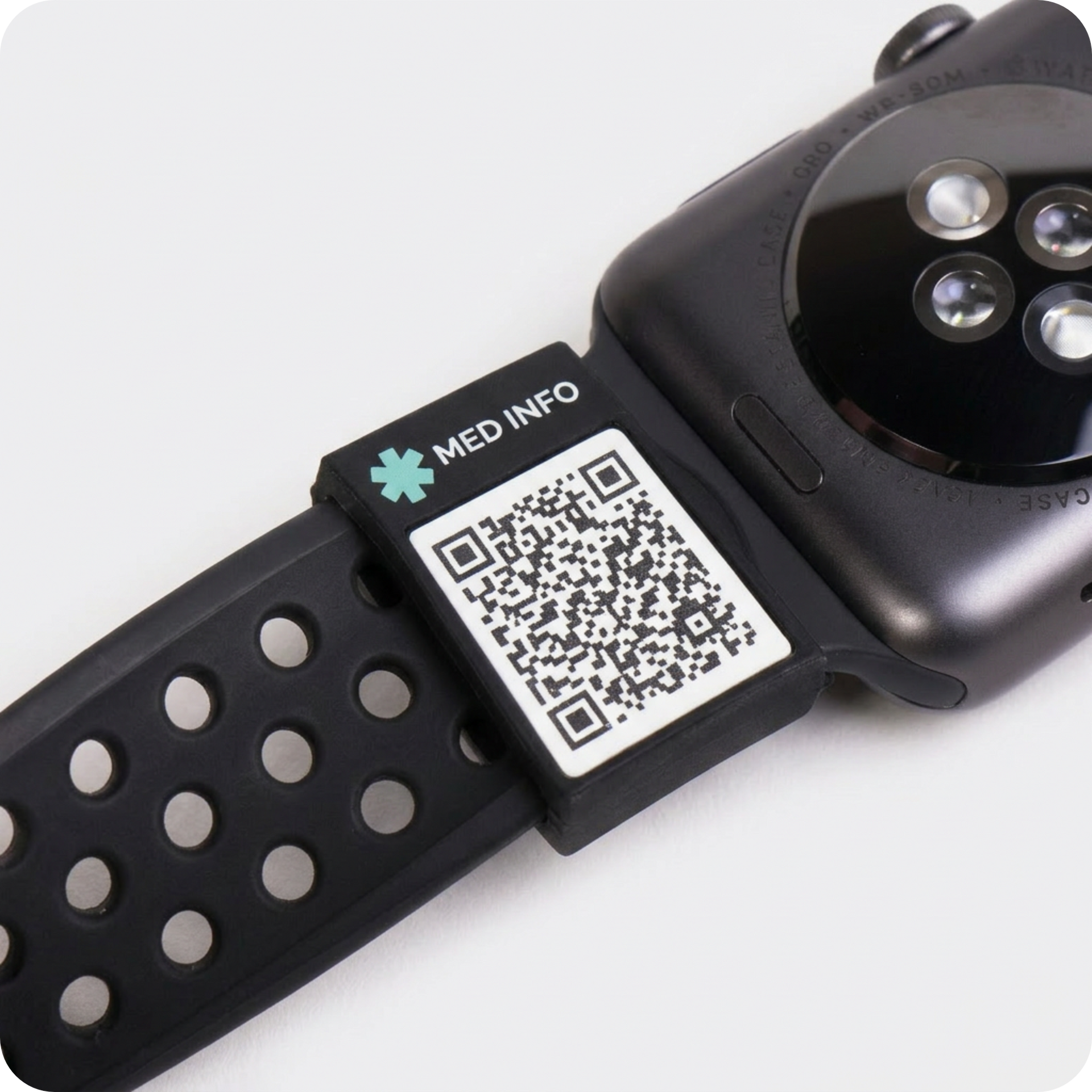
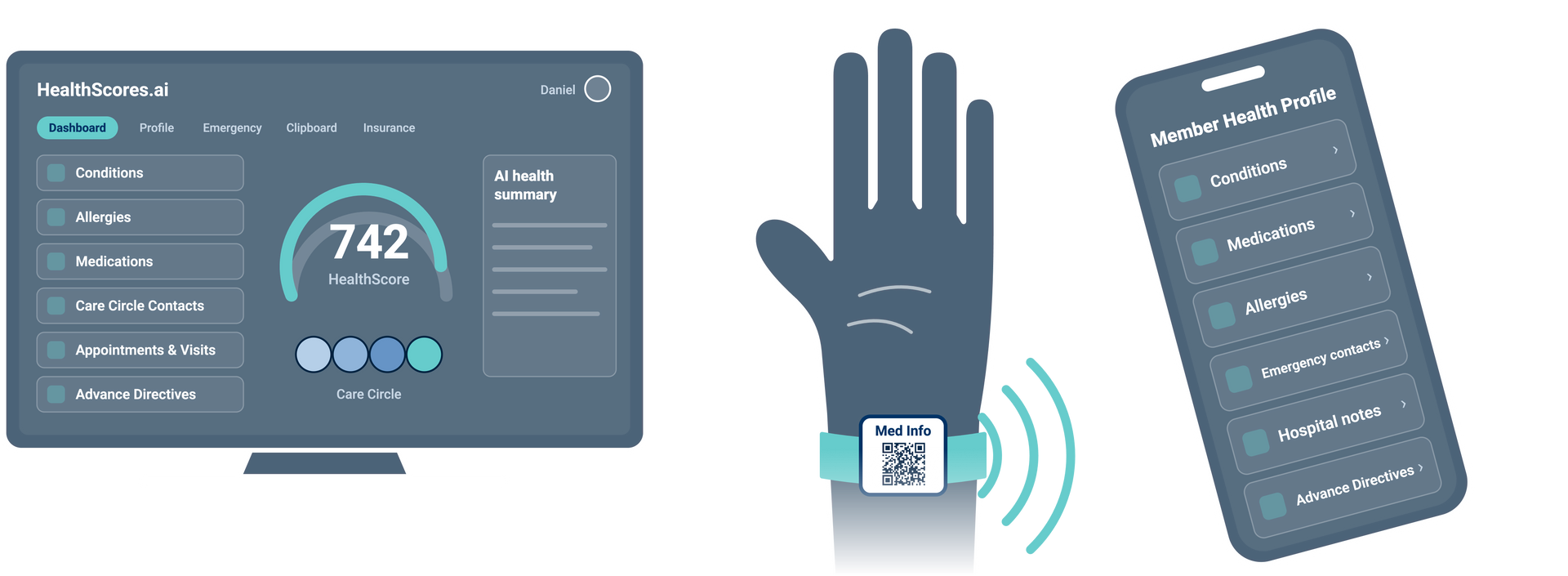
The patient wears a HealthScores.ai sleeve, made in partnership with MyID. The QR code on it opens their Emergency Health Profile, showing only the information the patient chose to share. Nothing more, nothing less.

Here's what crews scanned at Booth 001:

What do I scan?

The QR code on the patient's HealthScores.ai sleeve.

What opens?

Their Emergency Health Profile, showing only what the patient chose to share.

What might it include?

Medications, allergies, conditions, emergency contacts, and medical history, where available and shared.

Join us Thursday

Thursday, September 10 · 2:00 to 2:45pm, Caesars Expo Hall, Main Stage

Technology & Tools: Implementing Your Feedback to Reduce Friction in Charitable Patient Support

Mainstage, featuring Tom Malone, VP Product at zPaper, alongside the HealthWell Foundation, Patient Advocate Foundation, Accessia Health, and CancerCare.

Then come find us at Booth 301 and see what the patient walks away with.

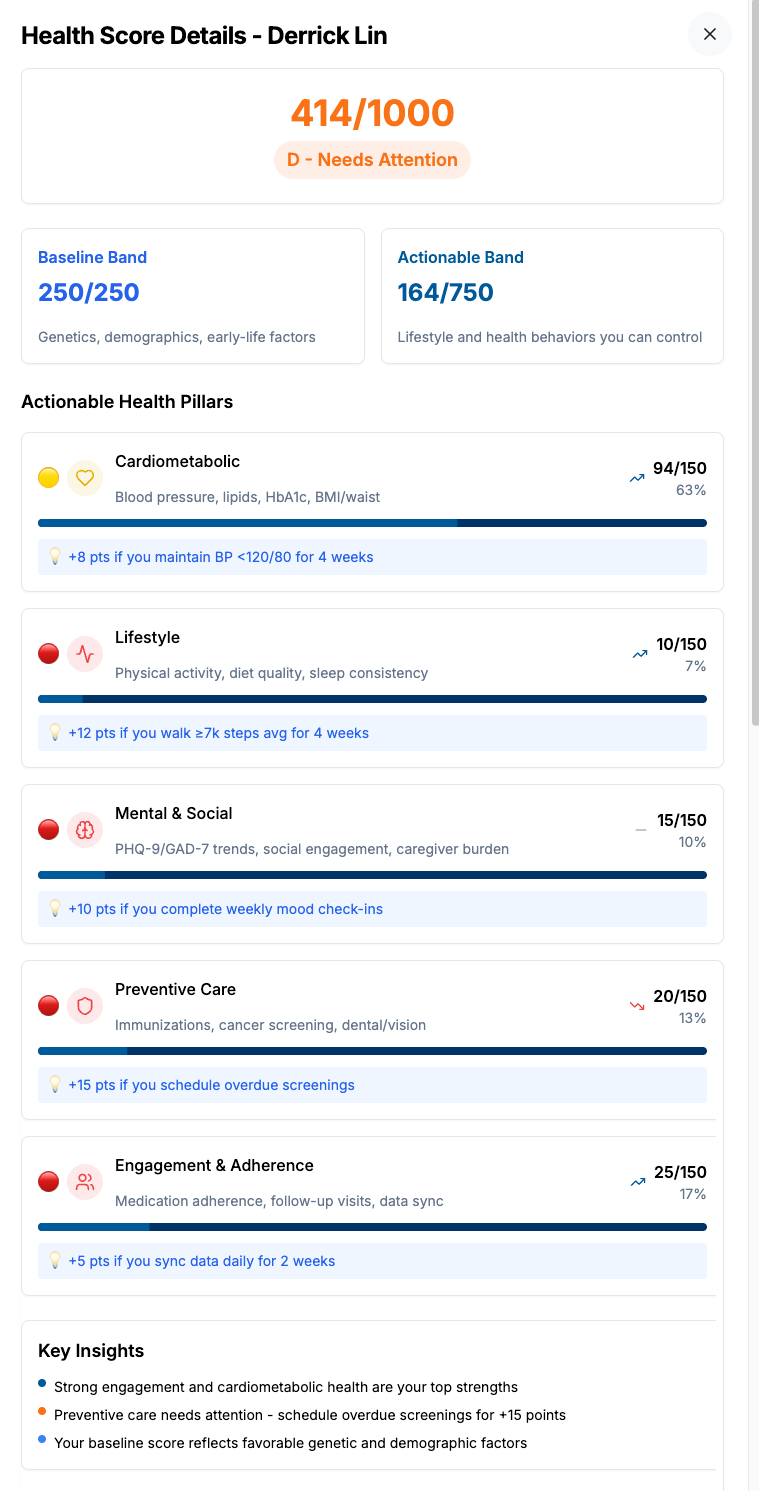
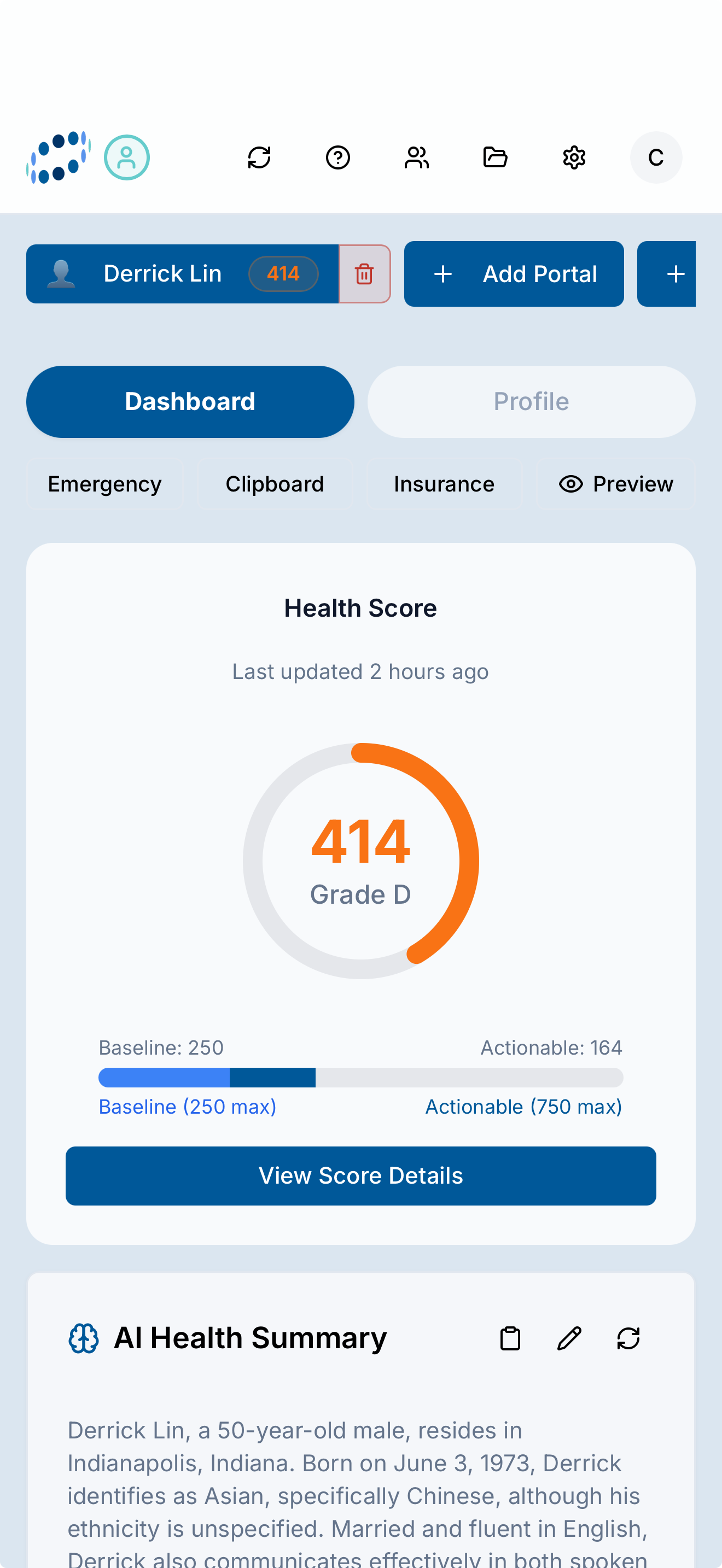
HealthScore details: baseline and actionable bands, five actionable health pillars, and key insights
414 Grade D

Click the image to enlarge

01 / 07

HealthScores

The first sign of trouble should not be a 911 call. Help prevent avoidable ER visits with insights you can act on, and a number that moves with your health and your actions.

Your score runs from 0 to 1000. It turns everything in your Health Profile into one number your whole family can understand. Every point has a reason and a next step. Schedule that overdue screening, and the number moves. Take a walk, and it moves. A new lab result moves it too. The score gives you credit for what you do, not just what your chart says.

02 / 07

Health Profile

Your health story is spread across provider portals that do not talk to each other. The Health Profile brings it together. Health data from your portals and your wearables, in one secure record you own, in your own Google Drive. We never take custody of it. You choose what to share, and who sees it.
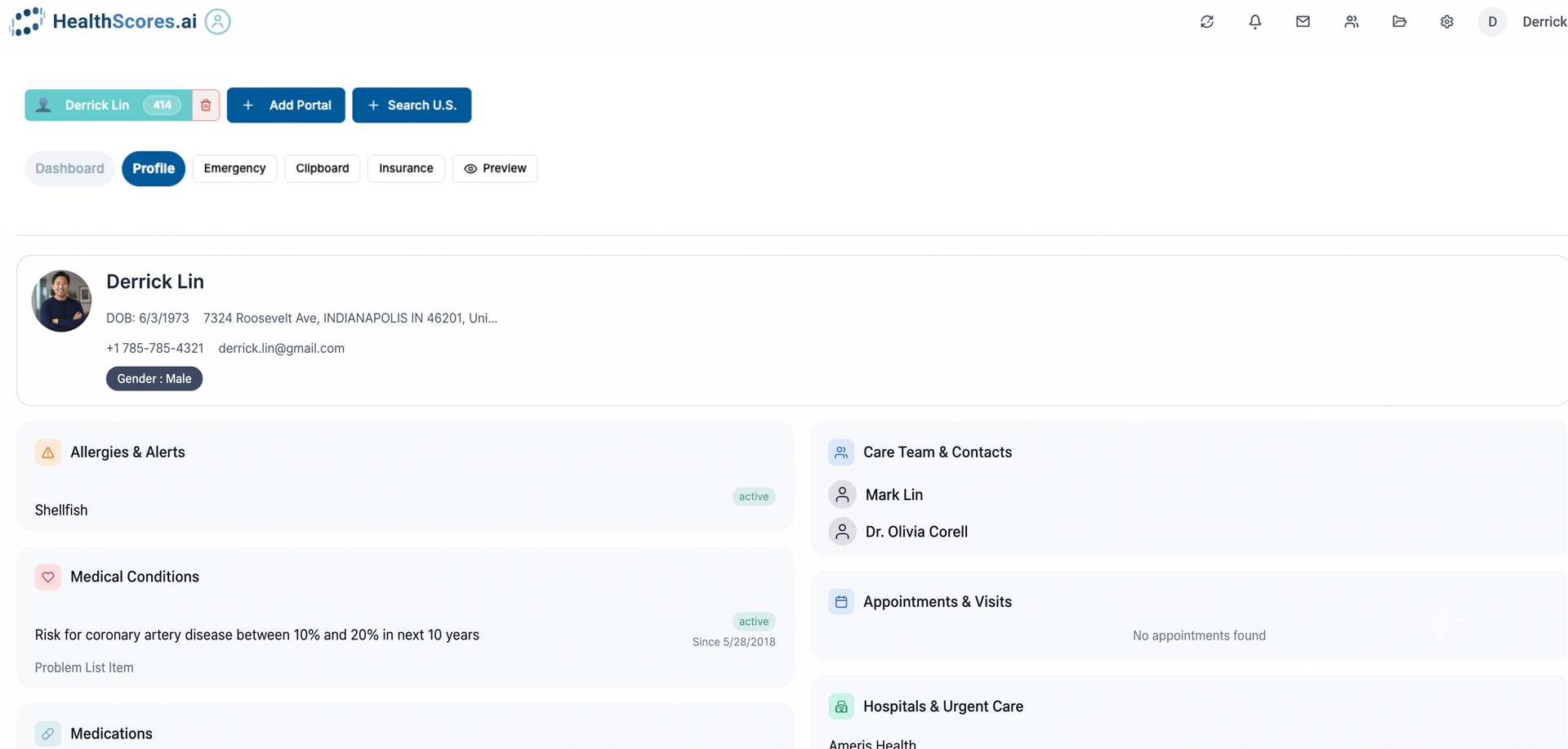
Health Profile screen: allergies and alerts, medical conditions, medications, care team, and appointments in one record

Click the image to enlarge

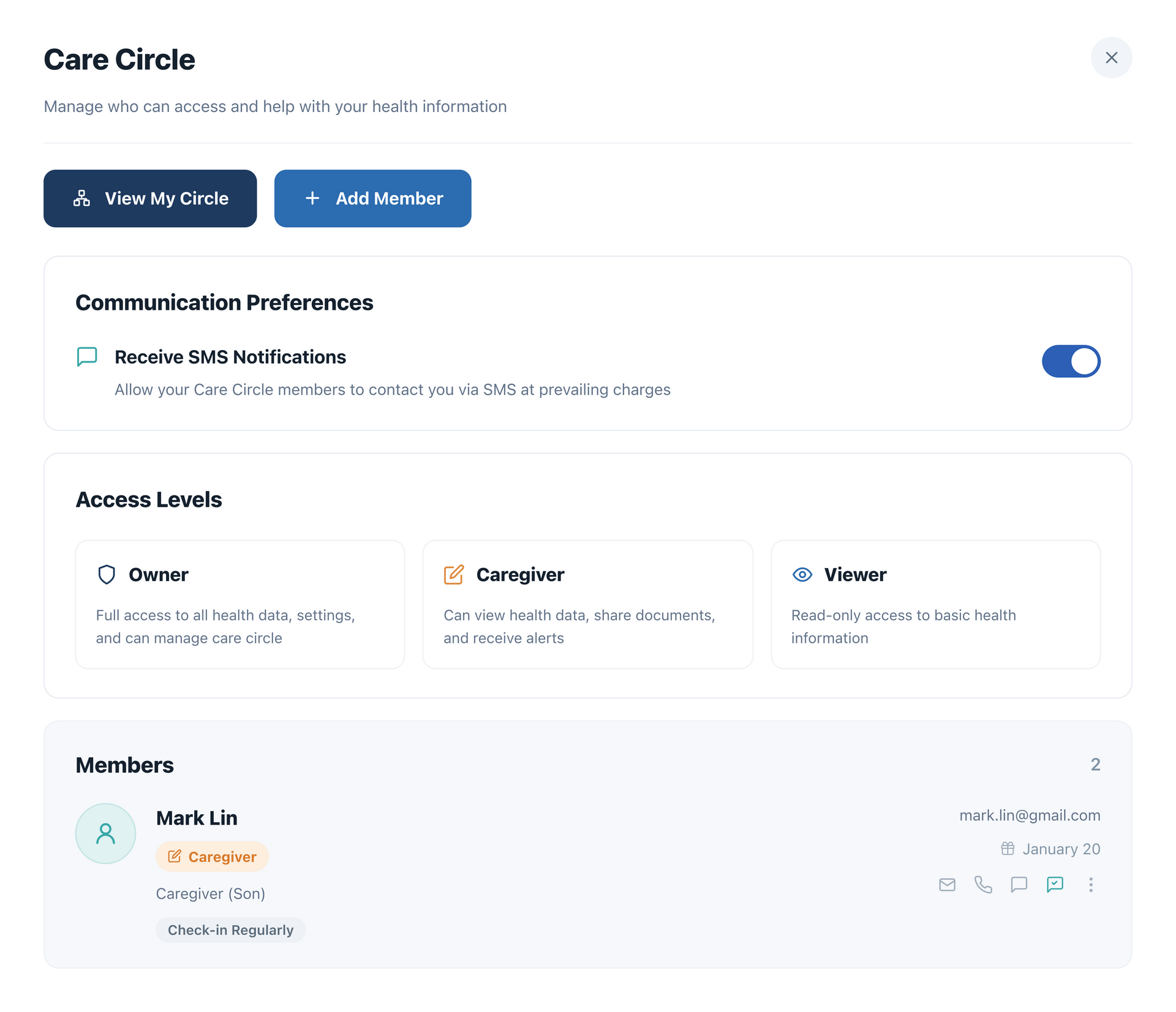
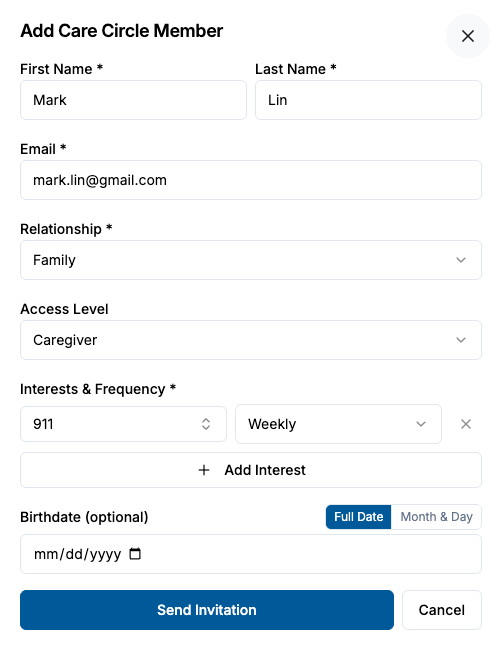
Care Circle screen: communication preferences, access levels for Owner, Caregiver, and Viewer, and members listAdd Care Circle Member form: name, email, relationship, access level, interests, and invitation

Click the images to enlarge

03 / 07

Care Circle

The family is usually already on scene, and they are usually the ones who called. Care Circle is the group of people the member chose to keep in the loop: a spouse, an adult child, a doctor, an advocate. They get alerts the member configured, on the health signals the member picked, so they often know something has changed before they call you. When you ask "has anything been different lately," the person answering has been looking at the same record you just scanned.
Click the images to enlarge

04 / 07

The Wristwatch Sleeve

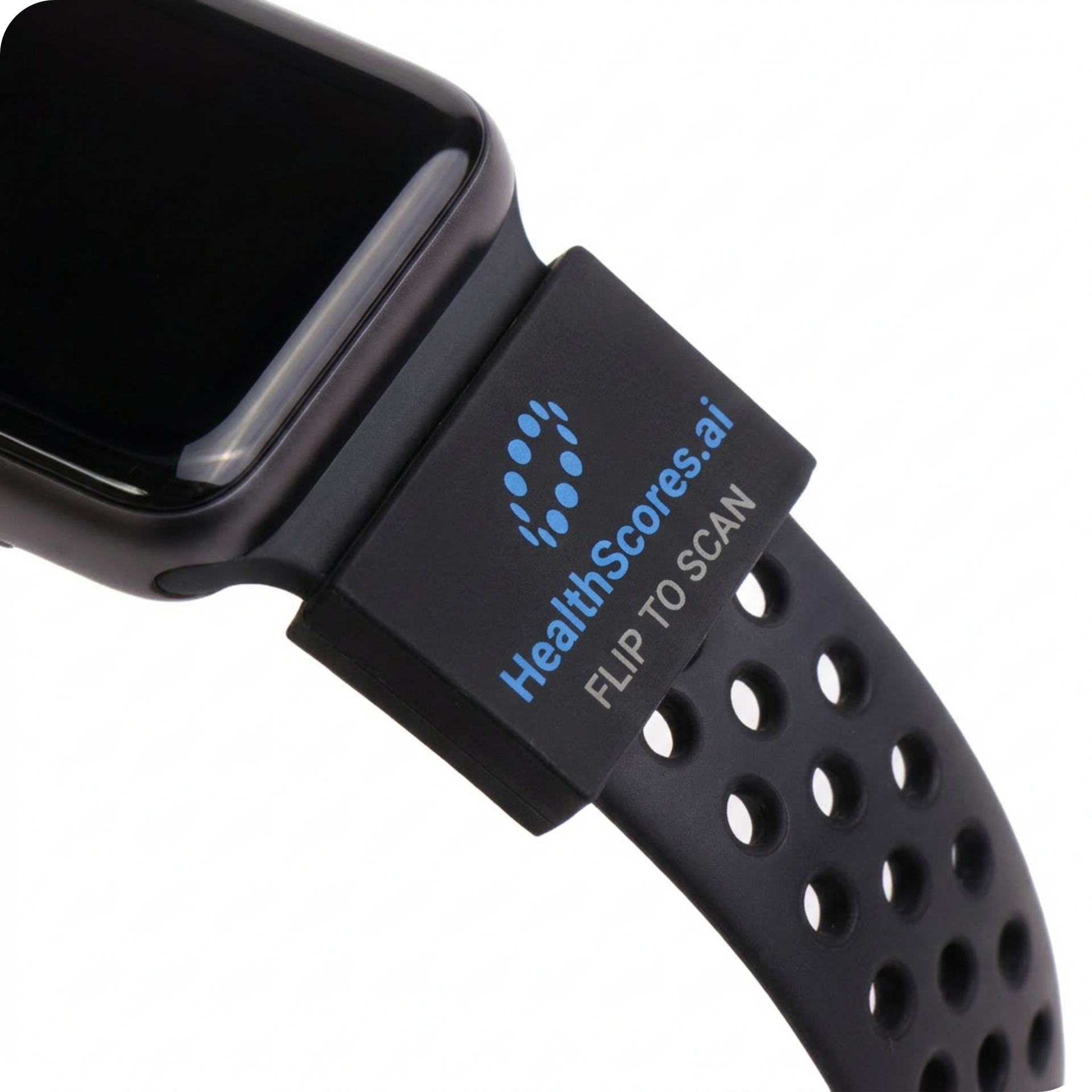
The sleeve, made in partnership with MyID, slides onto a watch band and carries the member's QR code. Flip it to the Med Info side and scan. It opens the health information the member has chosen to share, for the moment they cannot speak for themselves.

Members connect their watch through the HealthScores.ai mobile app. Wearable data feeds their score and triggers the alerts their Care Circle relies on.

05 / 07

What the scan shows

Scan the QR code on the patient's HealthScores sleeve with any phone camera. It opens the health information the patient has chosen to share. Depending on what they included, that can be medications, allergies, conditions, emergency contacts, and recent/upcoming doctors appointments.

The patient decides what is on it. What you see is what they chose to make available, not their complete medical record.

Scan the sleeve - What opens on your mobile device
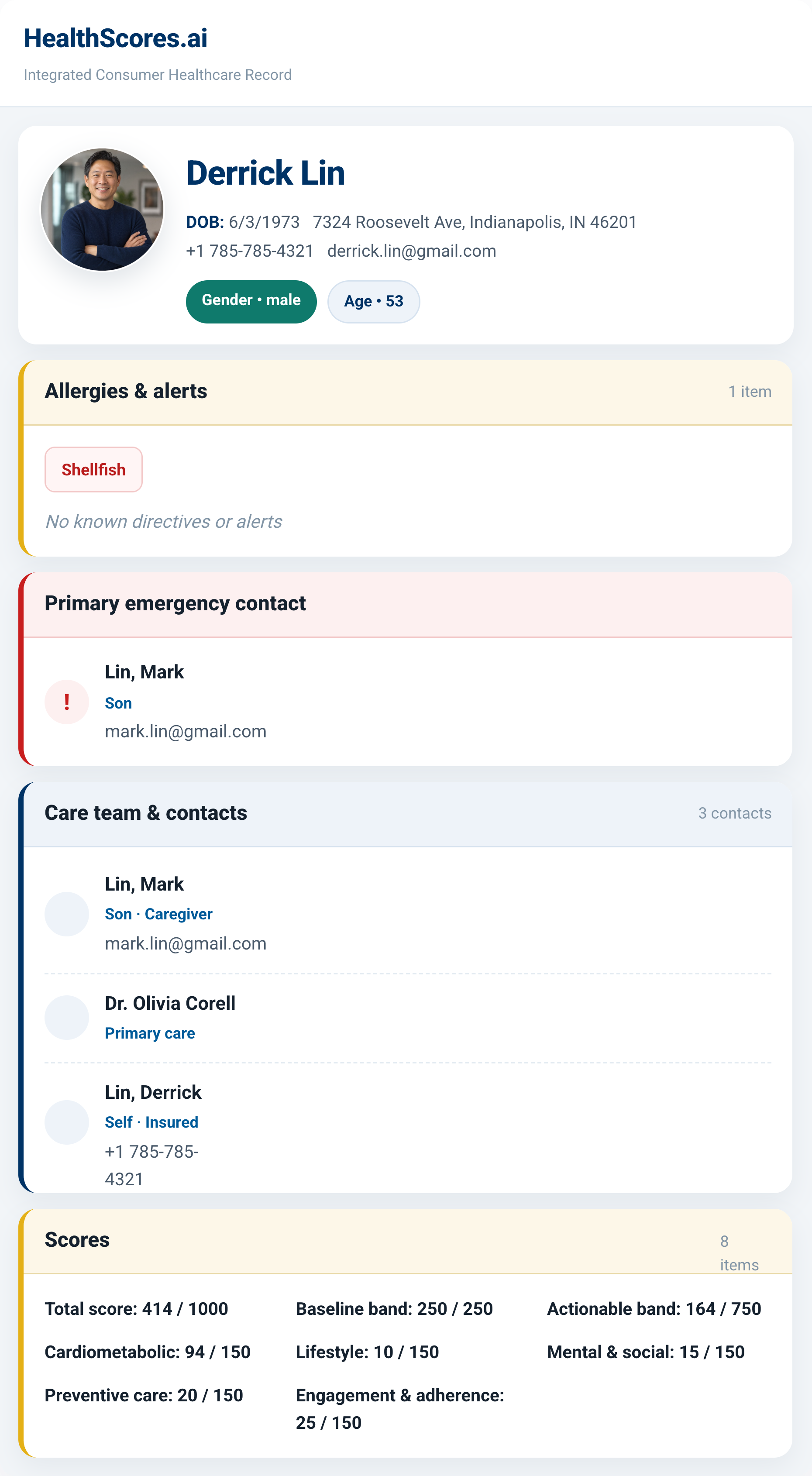
Derrick Lin's health record as it opens on a phone after scanning the sleeve: allergies and alerts, primary emergency contact, care team, and scores

The document Derrick's sleeve QR code opens. Sections appear only where he has added the information and chosen to share it. The second QR code carries the same information as a FHIR file for the receiving system.

06 / 07

ePCR and EHR compatibility

The second QR code on the shared document delivers the same information as a FHIR file, the format ePCR and EHR systems can accept directly. The crew scans once in the field. The receiving team files the same record to the patient chart without retyping it.

What travels is still limited to what the patient chose to share.

QR code 2 · FHIR for ePCR and EHR

qr.md
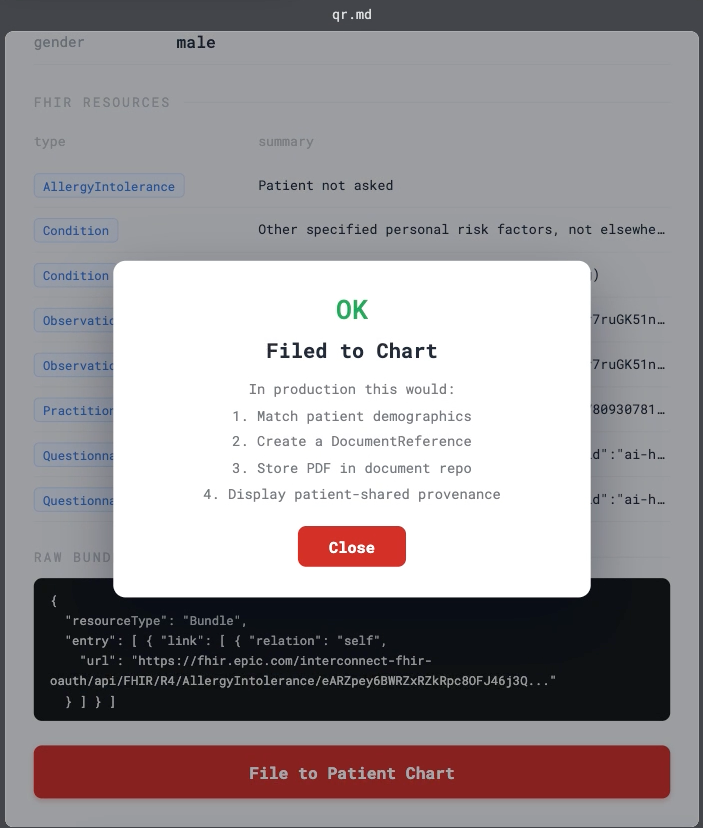
FHIR resources filed to the patient chart from the receiving system

The receiving team downloads the FHIR file and files it to the patient chart. It contains only what the patient chose to share.

Station Rd Oak St Ambulance dispatched Patient location ePCR · On arrival Patient health profile Open shared profile
07 / 07

Geotargeted access

The ambulance is dispatched to the patient's address. With a participating ePCR platform, a link to the patient's shared health profile becomes available in the crew's record when they arrive at that location. The crew opens the same information the sleeve would show, without having to find the wrist first.

Access is tied to the patient's location, the patient's sharing settings, and the agency's ePCR integration. What the crew sees is what the patient chose to share. Ask us at the booth which platforms are in the integration program.

Click anywhere to close
Who we met in Orlando

Chiefs, directors, medics, and the physicians who write their protocols

EMS / Fire Chief

You know the addresses your crews visit every month. Most of those patients are managing multiple conditions across several providers, and none of the four has the whole chart. HealthScores.ai puts that chart in the patient's hands and on their wrist, so the crew reads it instead of reconstructing it.

EMS / Executive Director

Repeat calls to the same homes are a cost line and a quality metric at the same time. If you run or are building a community paramedicine or mobile integrated health program, an enrolled patient population with a shared, patient-owned record is the conversation we came to have. Bring the numbers you are held to. We will bring what the record can and cannot do today.

Medical Director / Physician

Every record on the scan came from the patient's own provider portals, is held in the patient's own storage, and travels as FHIR. What we do not have is your read on what belongs on the first screen, what should never be on it, and what a crew needs to know about source and freshness before they act on it. Hanna Eadeh, MD, our medical advisor, will be at the booth for exactly that conversation.

EMTs and Paramedics

Scan the QR code on the patient's HealthScores sleeve and you have the medication list, allergies, conditions, and emergency contacts they chose to share, pulled straight from their own provider portals rather than a family member's best guess. Anticoagulants, insulin, seizure history, a cardiac device: the things that change your next five minutes. It's context for your assessment, not a substitute for it, and the same record exports as a FHIR bundle so the receiving ED gets what you saw without anyone retyping it.

Pricing

What it costs the patient

Medicare members get a free trial of the web app for 90 days.

$99  a year

for HealthScores.ai membership on the web.

$9.99 0.99 one time during October 2026

for the mobile app on Apple App Store and Google Play, which connects the member's wearables and powers notifications.

$20  one time

in partnership with MyID, worn on the wrist and carrying the QR code for emergencies.

Being in someone's Care Circle is free and is not a membership. Members invite the people they choose, and those people see the dashboard and notifications the member allows.

Follow up with the team

Missed us in Orlando? Let’s talk anyway

Whether you scanned a sleeve at Booth 001 or you’re hearing about HealthScores.ai for the first time, the same team is happy to walk your agency through it. Fill out the form and we’ll find a time.

Eric Stephens

CTO | Co-Founder

zPaper | HealthScores.ai by zPaper

Judson Bruno

Product Manager

HealthScores.ai by zPaper

Hanna Eadeh, MD

Medical Advisor

HealthScores.ai by zPaper

Find HealthScores.ai in the CMS Medicare App Library on Medicare.gov.

zPaper, the team behind HealthScores.ai, is a listed pledgee of the CMS Kill the Clipboard initiative, a commitment on record with CMS to a simple standard: your health records travel with you, shared in a scan, so you never have to write out your medical history from memory again. See all pledgees at cms.gov/health-tech-ecosystem/early-adopters/kill-the-clipboard