Kill the Clipboard: What It Means When You Are the One Managing Care
You know the folder. It might be an actual folder, or a note on your phone, or a photo of a pill bottle you took in a pharmacy parking lot two years ago because you knew you would need it again.
If you are managing care for a parent, a spouse, or a child, you have become an unpaid records department. You know the dosages. You know which specialist ordered which test and roughly when. You know the answer to "any changes since your last visit," because you are the change log. And every time you walk into a new office, someone hands you a clipboard and asks you to produce all of it from memory, accurately, in ten minutes, in a waiting room.
That is exactly what CMS is trying to end.
One honest note. This is a voluntary commitment, not a law. No hospital is required to participate, and adoption is uneven. It is getting better, and being clear about where it stands today is more useful to you than a promise that everything is already fixed.
What CMS is doing about it
In 2025, the Centers for Medicare and Medicaid Services launched an initiative called Kill the Clipboard. It asks technology companies to commit to something specific: let people retrieve their own health records and share them with a provider digitally, through a QR code, using shared standards that any health system can read.
Roughly sixty organizations signed on. Eleven health systems agreed to accept patient information shared this way, which is the part that makes it real. A digital record only helps if the office on the other side can open it.
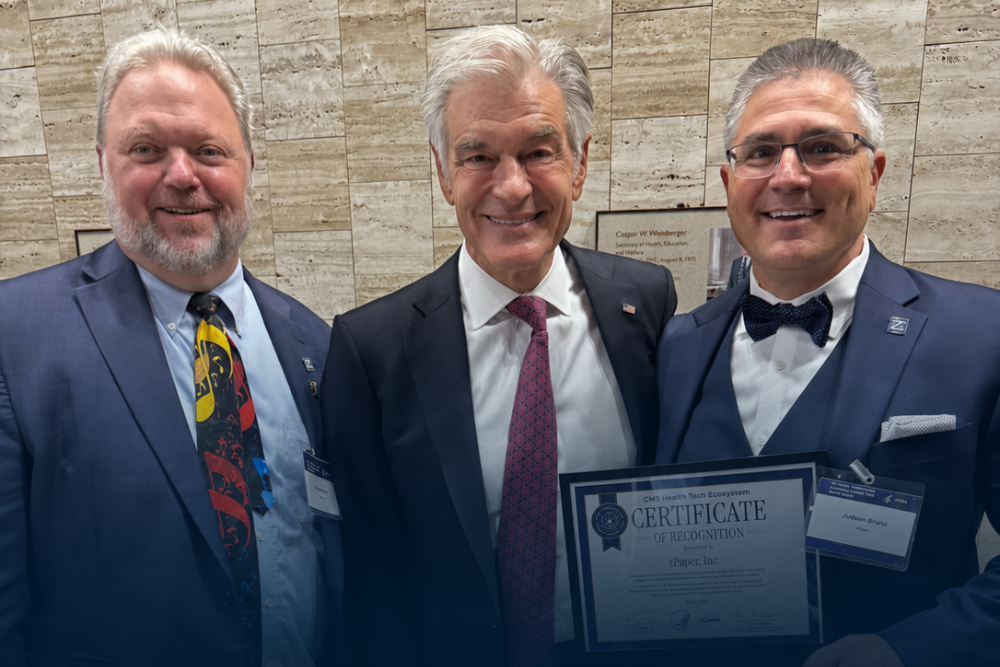
zPaper signed the pledge. HealthScores.ai is how we join the cause.
One honest note. This is a voluntary commitment, not a law. No hospital is required to participate, and adoption is uneven. It is getting better, and being clear about where it stands today is more useful to you than a promise that everything is already fixed.
What actually changes at the front desk
Instead of trying to remember specific medical history details to provide for intake documents, you show a qr code to make it digitally accessible, when you need it.
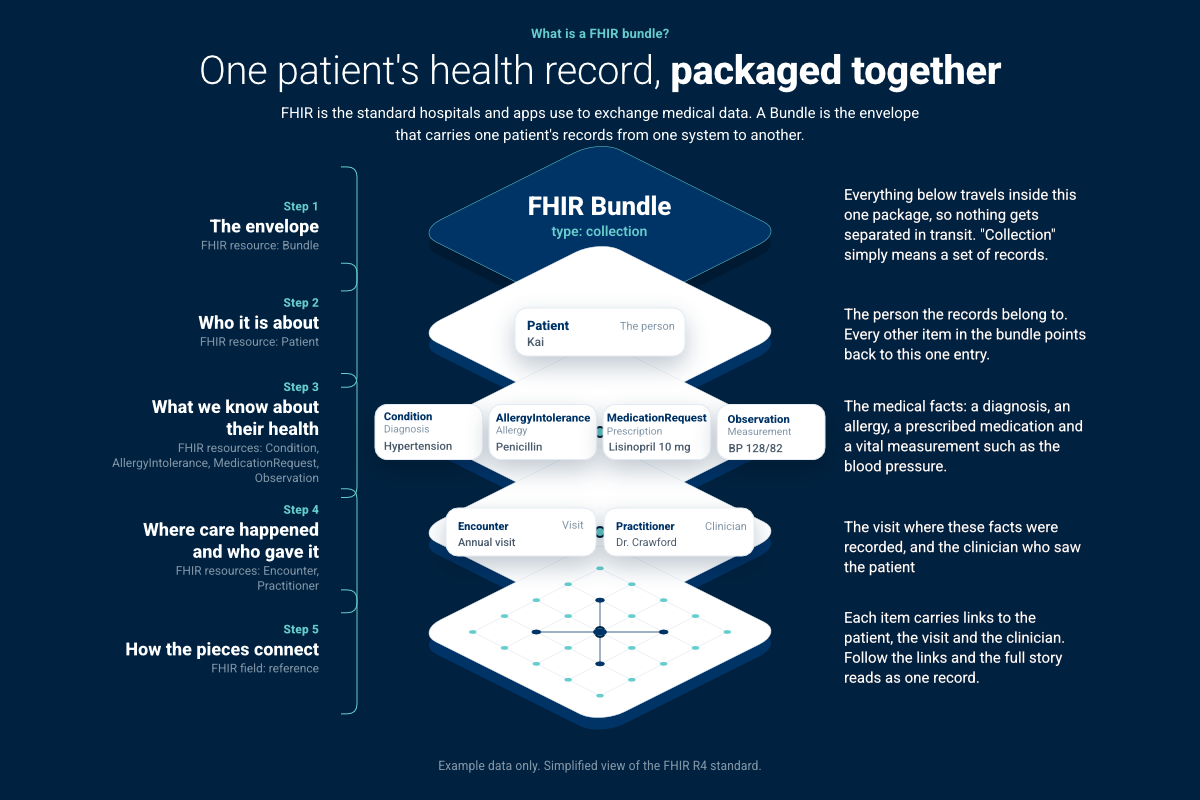
A SMART Health Link is a secure link that carries a set of health data members choose to make digitally available. When a provider scans the QR code , the information becomes available to them as digital document and structured FHIR data which can be pulled into an EHR, not a paper document or photo they have to manually pull information from. Health profile information a patient can be shareable includes (but not limted to) current medications, allergies, active conditions, and emergency contacts.
The information stays under the control of the person it belongs to so that they decide what to share and with whom. It is not a database someone else operates on your behalf.
The information stays under the control of the person it belongs to. You decide what to share and with whom. It is not a database someone else operates on your behalf.
The moment this matters most
Most days the clipboard costs you fifteen minutes and some anxiety about whether you got the dosage right.
Then there is the day you follow an ambulance to an emergency room.
In that room, the person you care for may not be able to answer questions. You may be too rattled to recall a medication list you know perfectly well on an ordinary afternoon. Whatever they decided in advance about their own care is sitting in a drawer at home. The people treating them are working without the context you spent years assembling.
A scan makes that context available right then. Not a guarantee of a particular outcome, because nobody can promise that. What it does is put the information in the room instead of in your folder at home.
When you are helping more than one person manage their health
Most health apps assume you are managing one record, your own. That is not the situation you are in.
You have your mother's records and your own. Maybe a child's too. Separate logins, separate portals, separate paper trails, and every one of them expects you to be a different person.
The Care Circle in HealthScores.ai is built for the version of this that is actually true. One dashboard, the people you are responsible for, their records and yours in the same place. When you walk into an appointment for one of them, you are not searching through three apps to find what you need.
What you can do now
- Ask your providers whether they accept digital records through QR codes or SMART Health Links. Enough people asking is what moves adoption faster than any pledge does.
- Start consolidating. Even before every office participates, having records in one place means you are not rebuilding history from scratch at each new appointment.
- And keep the folder for now. The system is changing, not changed. There is no reason to throw away the thing that has been working while the rest catches up.