What the CMS Kill the Clipboard pledge means for employers
Most benefits leaders did not notice when this happened, and that is fair, because it did not arrive as a regulation.
In July 2025, at a White House event, the Centers for Medicare and Medicaid Services announced commitments from roughly sixty healthcare and technology organizations around a shared interoperability framework. Apple, Google, Samsung, CVS Health, and UnitedHealth Group were among them. One piece of that framework got a name memorable enough to travel on its own: Kill the Clipboard.
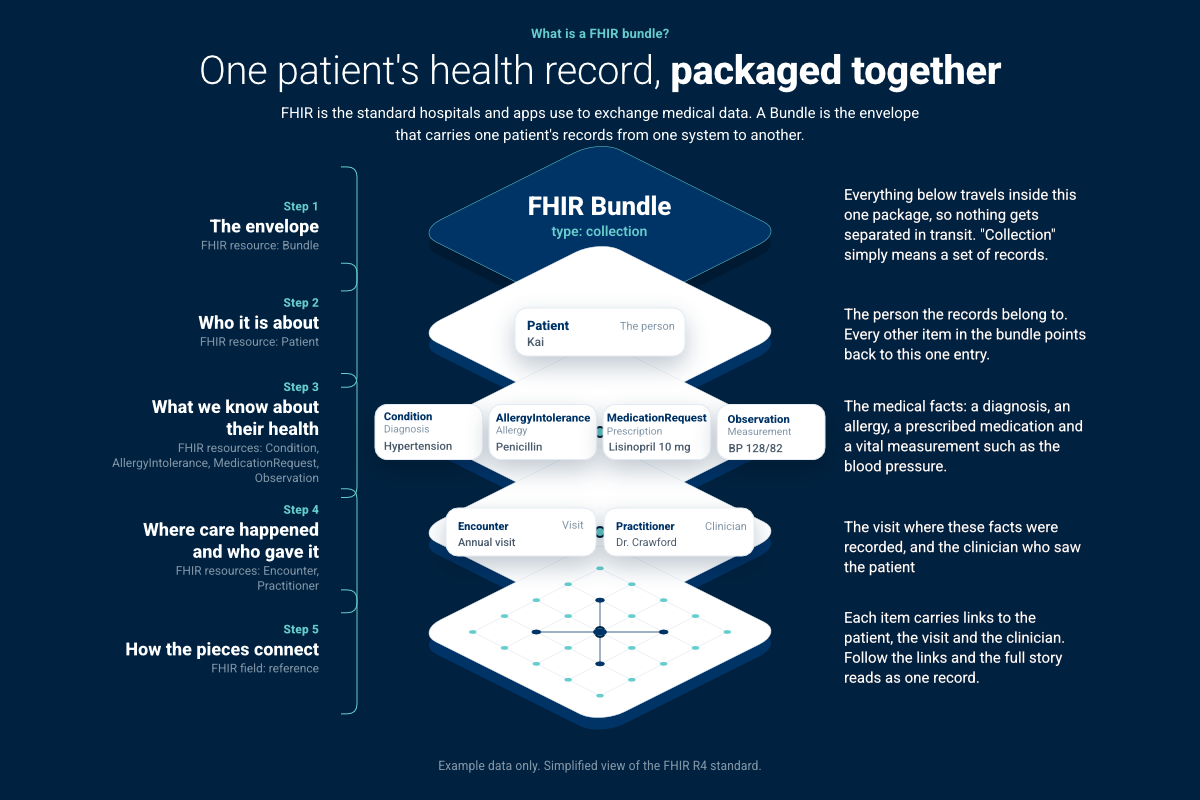
The commitment is narrow and specific. Companies that sign agree to let patients retrieve their own health records from CMS Aligned Networks or personal health record apps and share them with providers through QR codes or SMART Health Links, using FHIR bundles, which is the open standard health systems use to move clinical data. Where possible, they return visit records to the patient in the same format. CMS states the goal directly: eliminate the need for patients to repeatedly recall and write out their medical history.
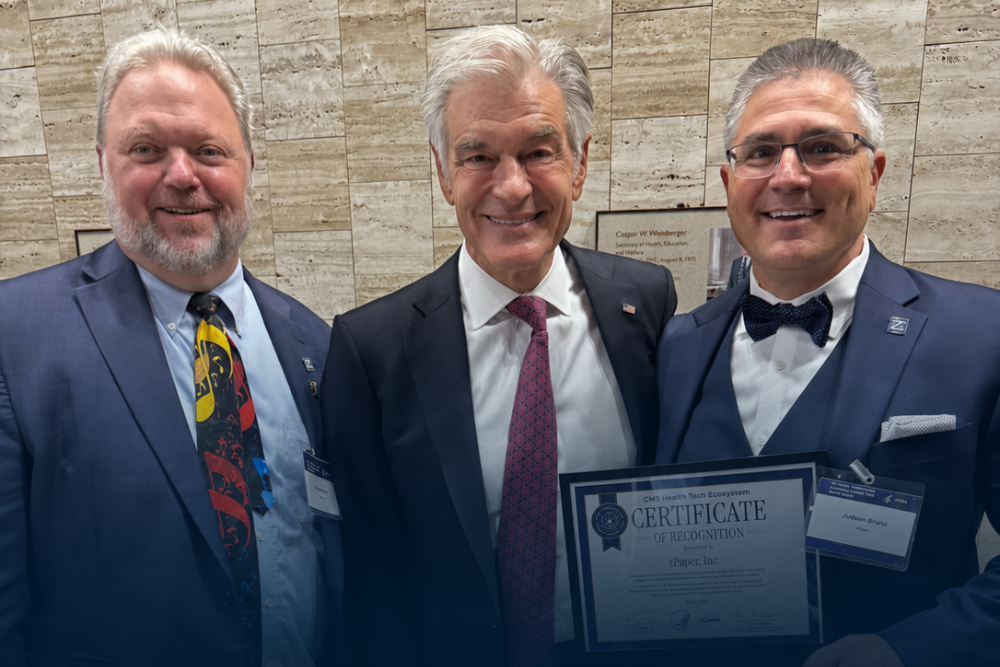
zPaper signed that pledge, and HealthScores.ai is the platform that delivers on it.
Why a paper form is an employer problem
The clipboard looks like a patient inconvenience. Follow the cost and it stops looking that way.
An employee filling out an intake form from memory is producing an incomplete record. Incomplete records lead to repeated tests, missed interactions, and appointments that end without resolution and get scheduled again. Each of those is a claim. None of them appear in your reporting as a data problem, because they appear as utilization.
Then there is the part that shows up in productivity rather than claims. A large share of the workforce is coordinating care for someone else, a parent, a spouse, a child with a chronic condition. That coordination happens during business hours, because that is when medical offices are open. It looks like a two hour absence for an appointment, and underneath it is an hour on the phone requesting records, another hour filling forms with information the employee is not confident about, and a follow up appointment because something was missing the first time.
The employee is not managing their health. They are performing clerical work on behalf of a system that will not talk to itself.
Then there is the part that shows up in productivity rather than claims. A large share of the workforce is coordinating care for someone else, a parent, a spouse, a child with a chronic condition. That coordination happens during business hours, because that is when medical offices are open. It looks like a two hour absence for an appointment, and underneath it is an hour on the phone requesting records, another hour filling forms with information the employee is not confident about, and a follow up appointment because something was missing the first time.
The employee is not managing their health. They are performing clerical work on behalf of a system that will not talk to itself.
What the pledge changes, and what it does not
Be clear-eyed about this, because it is not a mandate and treating it as one will make you look uninformed in a vendor conversation.
There is no federal requirement here. No fines, no enforcement deadline, no compliance obligation attached to signing. CMS set a target of the first quarter of 2026 for early progress, but that is a goal, not a rule. Any vendor telling you they are "CMS compliant" because of this pledge is describing something that does not exist.
What It Is Not
- A federal requirement
- Fines are an enforcement deadline
- A certificate. "CMS compliant" does not exist
What It Is
- One shared, open standard for moving records
- Public accountability among ~60 signatories
- Eleven health systems accepting shared records at launch
What the pledge does create is a shared standard and public accountability. Sixty organizations agreeing on how records should move is more useful than any one of them building a proprietary version. Eleven health systems committed to accepting patient information shared this way at launch, which is the piece that determines whether any of it works in practice. A QR code is only useful if a provider can scan it and read what comes back.
Momentum has continued since launch. Imprivata joined in January 2026, and Samsung and b.well announced partnership work around the initiative at HIMSS in March. This is an active movement rather than a one-day announcement.
Where HealthScores.ai fits
HealthScores.ai brings a member's records, connected device data, and health signals into one place, and it generates a SMART Health Link so those records can be made available to a provider with a scan.
The Care Circle is the part that speaks directly to a benefits population. A member can manage records for the people they care for, so the employee coordinating a parent's specialist visit and their own annual physical is working from one dashboard rather than a separate login and a separate paper trail for every person they are responsible for.
The pledge is the standard. The Care Circle is the reason it reaches the people on your plan who are carrying the most.